
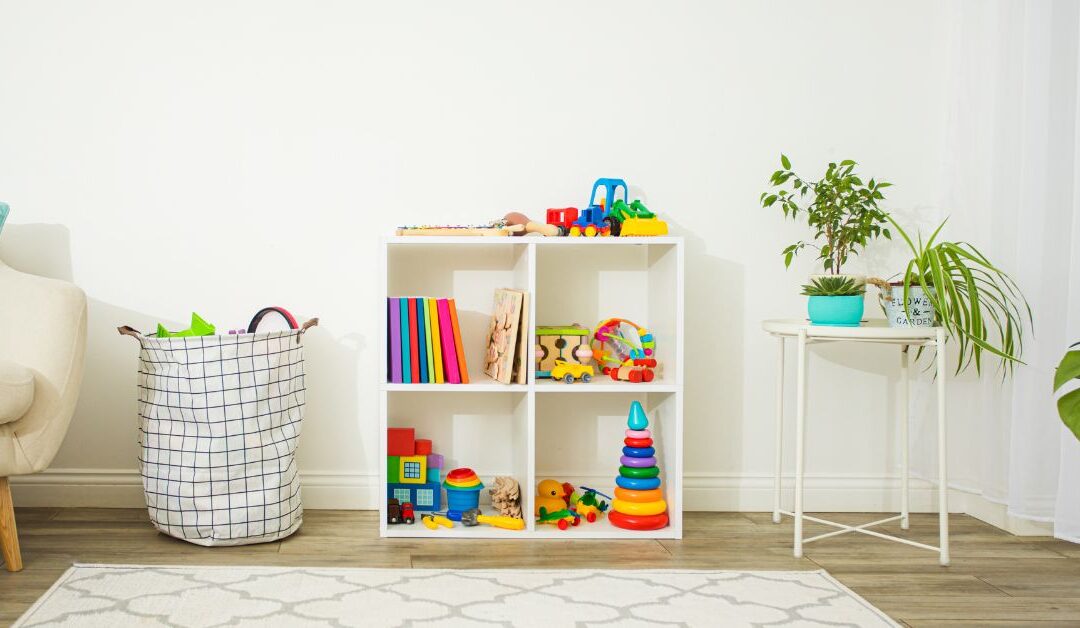
Small living spaces don’t have to limit your child’s playtime. Parents of infants and toddlers often struggle with keeping toys & games, educational toys, dolls & stuffed animals, and building & construction toys organised while maintaining a functional home. Clutter can create stress, make routines more difficult, and even pose safety hazards.
This visual organisation roadmap provides step-by-step strategies to maximise small spaces, making playtime enjoyable and accessible while incorporating nursery & baby gear, furniture & storage, and even clothing zones for baby & toddler clothing, sleepwear & pajamas, playwear & activewear, and outerwear & jackets. With thoughtful planning, even the smallest nursery, living room corner, or multi-purpose room can become a well-organised, engaging play area.
Step 1: Assess and Categorise Your Toys
Create a Toy Inventory
Start by taking stock of all toys, games, and learning materials. Divide items into categories such as:
- Educational toys for cognitive and sensory development
- Building & construction toys for problem-solving and motor skills
- Dolls & stuffed animals for imaginative play
- Books & learning materials for early literacy
Consider the age-appropriateness of each item. Rotate out items that your child has outgrown or doesn’t use regularly. Categorising helps visualise storage needs and prevents overcrowding.
Step 2: Use Vertical Storage Wisely
Maximise Floor Space
In small spaces, vertical storage is key. Shelves, cubbies, and wall-mounted organizers make use of empty wall space while keeping items within reach.
Tips:
- Open shelves for frequently used toys & games
- Stackable bins labelled for categories like building toys, dolls & stuffed animals, and books & learning materials
- Hooks or wall-mounted baskets for smaller items such as school supplies & stationery
Vertical storage also works for baby & toddler clothing. Use hanging racks or tall dressers for playwear & activewear, sleepwear & pajamas, and outerwear & jackets, keeping them organised and accessible.
Step 3: Implement Toy Rotation
Keep Playtime Engaging and Manageable
Toy rotation involves keeping only a selection of toys out at one time while storing the rest. Rotate every few weeks to maintain novelty and reduce clutter.
How to Rotate Effectively:
- Store excess toys in labelled bins in furniture & storage units
- Mix educational toys with dolls & stuffed animals to balance learning and imaginative play
- Include a few building & construction sets to encourage problem-solving
Rotation encourages children to focus on a smaller set of items at a time, boosting engagement without overwhelming small spaces.
Step 4: Create Zones for Play and Learning
Separate Activities Visually
Even in small spaces, separating areas can help children distinguish between different types of play. Consider:
- Reading and quiet time: small bookshelf for books & learning materials, cushioned seating, and soft toys
- Building and creative play: dedicated mat for building & construction toys, stacking blocks, and manipulatives
- Active play: open space for gross motor activities with playwear & activewear
Incorporate storage solutions like baskets and bins to define zones and reduce cross-over clutter. Labels and visual cues make tidying easier for toddlers.
Step 5: Incorporate Multi-Functional Furniture
Storage That Works Double Duty
When space is tight, furniture can pull double duty. Look for:
- Storage benches that double as seating
- Cribs with drawers underneath for bedding & room décor or toys
- Toy chests with compartments for sorting dolls & stuffed animals and building sets
Even small areas can accommodate well-planned furniture & storage that keeps both clothing and play items accessible without crowding the room.
Step 6: Keep Maintenance Simple
Make Cleanup a Routine
Maintaining organisation is easier with a simple routine:
- Schedule a 5-10 minute cleanup at the end of each day
- Involve your child in putting toys away—build early habits
- Keep labels visible for easy identification of categories like toys & games, books & learning materials, or baby & toddler clothing
Simple routines, combined with effective storage, prevent small spaces from becoming chaotic.
Key Takeaways
- Categorise and inventory toys before planning storage.
- Maximise vertical space using shelves, cubbies, and wall-mounted bins.
- Implement toy rotation to reduce clutter and maintain interest.
- Create designated zones for reading, building, and active play.
- Invest in multi-functional furniture to combine storage and usability.
- Maintain simple daily routines for tidying up.
Even the smallest space can accommodate a well-organised, engaging play environment that supports both learning and fun.
Organising toys & games in small spaces doesn’t have to be stressful. By categorising items, maximising vertical storage, rotating toys, and creating defined play zones, you can foster a safe, stimulating, and manageable environment for your infant or toddler. Multi-functional furniture, thoughtful storage solutions, and simple maintenance routines make it possible to keep educational toys, dolls & stuffed animals, books & learning materials, and even baby & toddler clothing organised and accessible.
If this visual roadmap helped you rethink your small-space organisation, share it with another parent or join our newsletter for more practical guides on nursery planning, infant products, and play-based learning strategies.