Last Updated: November 22, 2026
Quick Summary
Durable baby clothes are garments built to survive repeated washing, stretching, and everyday wear without losing shape, color, or softness. Choose long-staple cotton with flatlock seams and metal snaps, then wash cold on a gentle cycle and air dry to add months of wear.
- Turn garments inside out, fasten snaps, and wash cold on a gentle cycle to protect fabric.
- Skip fabric softener because it coats fibers and reduces absorbency.
- Long-staple cotton offers strong abrasion resistance and low pilling for daily wear.
- Buy sleepwear true to size rather than sizing up, since snug fit is a safety feature.
- Use fold-over cuffs and adjustable waistbands on daytime wear to extend fit.
Table of Contents
- Why Durable Baby Clothes Save Money and Reduce Waste
- How Long Should Newborn Clothes Last?
- How to Make Baby Clothes Last Longer: A Step-by-Step Routine
- Baby Clothes That Wash Well and Last: Fabric and Construction Checks
- Best Quality Baby Clothes Brands and What to Compare
- Fit and Sizing Strategies That Extend Wear Without Safety Risks
- Build a Longer-Lasting Wardrobe at All For Baby And Kids
- Frequently Asked Questions
Why Durable Baby Clothes Save Money and Reduce Waste
Durable baby clothes are garments built to survive repeated washing, stretching, and everyday wear without losing shape, color, or softness.
The math is simple. A cheap sleeper that wears out quickly can cost more per wear than a well-made one that lasts longer.
Below, we break down what makes baby clothes last, how to wash and store them so they hold up, and how to compare brands and fabrics.
How Long Should Newborn Clothes Last?
Newborn clothes are typically outgrown within a few months, and fit often ends a garment’s useful life before the fabric fails.
Frequent washing is the real stress test. A sleeper that fades, shrinks, or loses its snaps after a dozen cycles is unlikely to last long enough to be handed down.
Watch out: sizing up too aggressively to “get more wear” can create safety problems, especially with sleepwear that needs to fit snugly. More on that in the fit section below.
How to Make Baby Clothes Last Longer: A Step-by-Step Routine
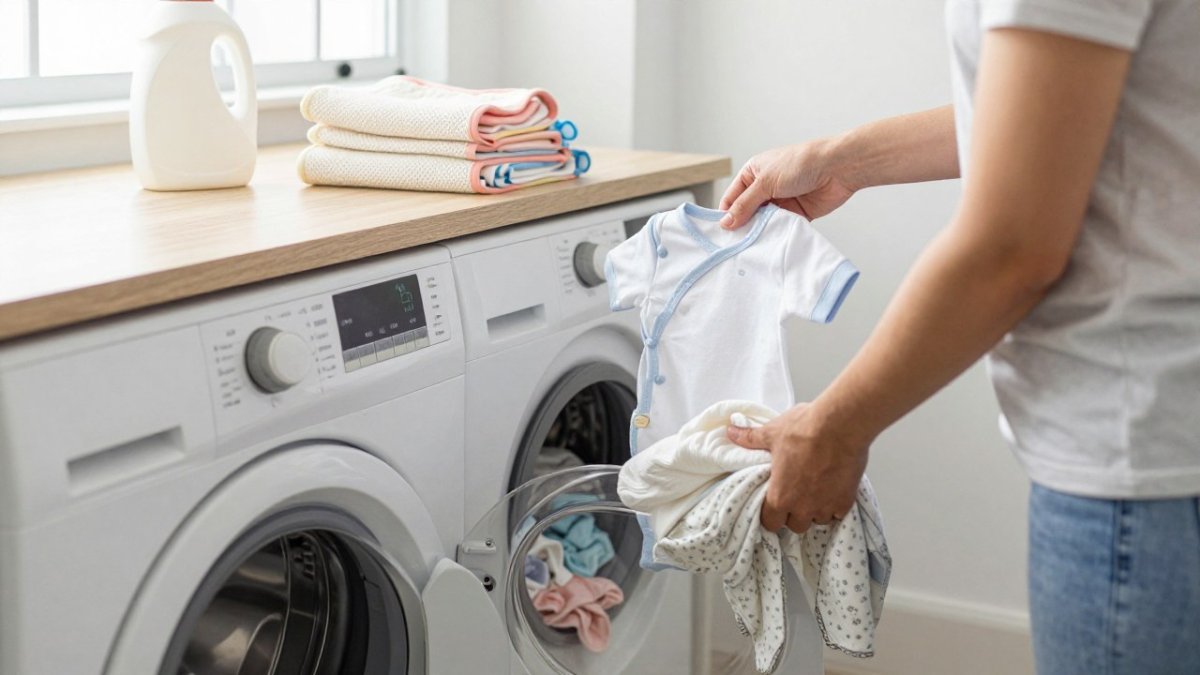
The single biggest factor in how long baby clothes last is how you wash them. A consistent, gentle routine adds months to every garment. Here is the routine we recommend to parents.
Wash Smarter: Settings, Detergent, and Load Size
- Turn garments inside out to protect the outer print and reduce surface pilling.
- Zip zippers and fasten snaps so they don’t snag other pieces.
- Use a mesh laundry bag for socks, hats, and anything with delicate trim.
- Wash cold on a gentle cycle. Heat is what shrinks cotton and breaks down elastic.
- Choose a mild, dye-free detergent and skip fabric softener, which coats fibers and reduces absorbency.
- Keep loads small. An overloaded drum causes friction and stretching.
Dry, Store, and Repair Before Replacement
Air drying is the cheapest durability upgrade you can make. Hang or lay flat to dry whenever possible, and use low heat only when you must. Store clean, fully dry clothes in a cool, dry place, folded rather than crammed, so knits keep their shape.
Repair before you replace. A loose seam or a missing snap is a two-minute fix with a needle and thread. Small repairs done early stop small tears from becoming unwearable holes.
Baby Clothes That Wash Well and Last: Fabric and Construction Checks
Fabric and construction decide durability before the first wash ever happens. Two garments can look identical on the rack and fail completely differently after a month of use. The problem with most buying advice is that it stops at “look for quality” without telling you what to measure. This section gives you consistent criteria so you can compare fibers and inspect construction the same way every time.
Fabric Comparisons: Cotton, Bamboo, and Blends on the Same Criteria
Instead of broad claims, score each fabric on the same five criteria: abrasion resistance (how it handles friction), shrinkage after repeated hot washes, pilling tendency, drying time, and softness against skin. Here is how the common fibers stack up.
- Long-staple cotton (including Pima and Supima): Strong abrasion resistance, moderate shrinkage that stabilizes after the first few washes, low pilling because longer fibers twist into smoother, stronger yarn, moderate drying time, and good softness. This is the most reliable all-around choice for daily wear.
- Standard short-staple cotton: Lower abrasion resistance, higher shrinkage, and a much greater tendency to pill as short fibers work loose. It is not automatically a bad buy, but expect a shorter useful life under frequent washing.
- Organic cotton: The fiber structure and durability behave like conventional long-staple cotton; the difference is in growing and finishing, which many parents prefer for sensitive skin. Do not assume “organic” means thicker or stronger, check the knit weight and seam construction separately.
- Bamboo viscose: Exceptional softness and drape, but lower abrasion resistance, a higher tendency to stretch out of shape, and more pilling than cotton. It also tends to shrink and can lose body after repeated washing. Best reserved for pieces worn close to the skin rather than hard-wearing everyday items.
- Cotton-bamboo blends: Balance softness with strength. A blend with a meaningful cotton share holds shape better than pure bamboo while staying softer than pure cotton.
- Polyester and poly-blends: High abrasion resistance and low shrinkage, but they can pill, hold odors, and feel less breathable. Useful in small amounts for stretch and recovery, less ideal as the primary fiber against sensitive skin.
A practical rule: the tighter and denser the knit, the better it resists thinning. Hold the garment up to light, if you can see through it easily, it will likely thin out fast at the knees, elbows, and seat.
If you are weighing these options, our guide on how to buy organic cotton baby onesies online walks through what to look for. For a deeper look at the softer side, read why choose bamboo fabric for babies.
Seams, Snaps, and Stitching to Inspect Before Buying
Run these checks before you buy, and score each garment pass or fail rather than guessing:
- Seams: look for flatlock or reinforced seams, not single straight stitches. Gently pull the seam, if you can see light through the stitch line, it will split under wash stress.
- Snaps: metal snaps outlast plastic; check they are securely set and that the fabric around them is reinforced. A snap that pulls through the fabric is one of the first failures on cheap garments.
- Stitching: dense, even stitches along cuffs, necklines, and the crotch. Uneven or loose stitching signals a garment that will fray early.
- Fabric weight: a slightly heavier knit resists thinning. Compare grams per square meter where the brand publishes it, or simply compare heft side by side.
- Stretch recovery: gently pull the cuff and neckline and see if it springs back. Slow recovery means the elastic will bag out within weeks.
- Reinforcement points: check the crotch, underarm, and knee areas for double stitching or added fabric, since these take the most abrasion.
- Zippers: a sturdy zipper with a fabric guard behind it protects skin and reduces snagging; flimsy zippers are a common early failure.
A useful benchmark is to imagine the garment after 40 to 50 washes. If a seam, snap, or knit already looks marginal on the rack, it will not survive that cycle count. This pre-purchase inspection is the single best predictor of whether a piece reaches hand-me-down status.
Best Quality Baby Clothes Brands and What to Compare
The best quality baby clothes brands share three traits: durable fabric, strong construction, and honest care instructions. Price alone tells you very little. A higher price tag does not guarantee a garment survives more washes.
When comparing brands, score each one on these criteria:
| What to Compare | Why It Matters | What Good Looks Like |
|---|---|---|
| Fabric type | Predicts pilling and shrinkage | Long-staple or organic cotton |
| Seam construction | Prevents blowouts and tears | Flatlock or reinforced seams |
| Snap and zipper quality | Fails first on cheap garments | Metal snaps, sturdy zippers |
| Care instructions | Hints at real durability | Machine washable, low fuss |
| Sizing range | Extends wear as baby grows | Clear charts, room to grow |
| Certifications | Signals safe, tested materials | Recognized textile certifications |
For a curated shortlist, see our guide to the best eco friendly baby clothing brands. If budget is tight, our roundup of affordable organic baby clothes for newborns shows options that still hold up.
Fit and Sizing Strategies That Extend Wear Without Safety Risks
Fit is where durability and safety meet. A garment that fits well gets worn more and washed less harshly, but loose sleepwear can be a hazard. The goal is room to grow without compromising safety, and that requires treating sleepwear and daytime wear as two different problems.
Sleepwear: Snug by Design, Not Sized Up
Sleepwear is the one category where you should not size up for longevity. Snug-fitting sleepwear is designed to fit closely for safety reasons, and a loose fit defeats that purpose. Buy true to size, follow the size chart by weight and height rather than age, and check the garment’s fit label.
Watch out: do not remove or alter snug-fit features such as elastic cuffs or flame-resistant labeling to “make room”, that undermines the safety design.
Daytime Wear: Adjustable Features That Buy Months
For daytime pieces, look for adjustable features that let a garment fit longer as your baby grows:
- Fold-over cuffs on sleeves and feet extend length and protect against scratching.
- Elastic or drawstring waistbands accommodate a growing belly without gaping.
- Generous neck openings with envelope shoulders make dressing easier and fit longer.
- Adjustable straps on rompers and overalls add usable length.
- Room-to-grow hems with extra fabric can be let down on some styles.
Size up only for daytime wear where a little looseness is safe, and check sizing charts carefully before ordering online. A well-charted size range beats guessing every time. The practical strategy is to buy true to size in sleepwear and use adjustable daytime pieces to stretch the wardrobe across growth spurts, so durability and fit work together instead of against each other.
Build a Longer-Lasting Wardrobe at All For Baby And Kids
A durable wardrobe starts with fewer, better pieces you can wash hard and pass down.
Our 8-piece cotton baby bodysuits set is a practical starting point for a wardrobe that survives constant washing and a second child. Browse our collection to build a nursery wardrobe that lasts.
Building a wardrobe that holds up takes the right pieces and the right routine.
Frequently Asked Questions
What are the best quality baby clothes brands?
Look for brands that publish fabric weight, fiber content, and care instructions, and that use reinforced seams and metal or well-anchored plastic snaps. Quality shows up in details: flatlock or double-stitched seams, generous neck openings, and fabric that holds its shape after washing. Read parent reviews that mention pilling, fading, and shrinkage after several months rather than first-impression reviews. All For Baby And Kids offers a curated selection of baby clothing, so you can compare options in one place.
How can I tell if baby clothes are durable before buying?
Stretch the fabric gently across the grain and check whether it springs back. Inspect seams for tight, even stitching and look for reinforcement at stress points like shoulders, crotch snaps, and underarms. Check that snaps are anchored through a reinforced tab and that zippers have a fabric guard. Heavier fabric weight and longer cotton fibers generally resist pilling and thinning better. If you shop online, look for close-up photos of seams and read care instructions before you commit.
Which fabrics hold up best to frequent washing?
Long-staple cotton and cotton-rich blends tend to handle repeated machine washing well, keeping their shape and color longer than short-fiber fabrics. Bamboo is soft and breathable but can pill and stretch over time, so it often works best for sleepwear rotated gently. Avoid high-heat drying with any fiber, since heat breaks down elasticity and sets shrinkage. Check the care label and follow it, and wash baby clothes inside out in a mesh bag to reduce friction and pilling.
Are organic baby clothes durable?
Organic cotton can be just as durable as conventional cotton, and sometimes more so when it uses long-staple fibers and tighter knitting. The certification tells you about growing and processing standards, not about construction, so pair it with a construction check: seams, snaps, fabric weight, and stretch recovery. GOTS certification covers organic fiber and processing requirements, and it is worth looking for on the label. Durable organic baby clothes come from brands that combine certified fabric with reinforced sewing.
