Last Updated: October 26, 2026
Quick Summary
An eco friendly newborn starter kit focuses on a short list of daily essentials: 6-8 bodysuits, 4-6 sleepers, 2-3 muslin swaddles, 24-30 cloth diapers, and 2-3 dozen reusable wipes. Buy fewer, better items built from safer materials, and split your budget between newborn and 0-3 month sizes so you are not back-ordering in a panic.
- A newborn goes through roughly 8 to 12 diaper changes a day, or 240 to 360 in the first month.
- Plan on 24 to 30 cloth diapers so you can wash every other day without running out.
- Look for GOTS, OEKO-TEX Standard 100, and GREENGUARD Gold instead of unregulated eco-friendly claims.
- Keep the crib bare with a fitted sheet only, per American Academy of Pediatrics safe sleep guidance.
- Test one cloth diaper on your baby for a week before buying a full stash.
Table of Contents
- Building an Eco Friendly Newborn Starter Kit That Actually Gets Used
- The Prioritized Checklist: What to Buy First
- Organic Newborn Clothes and the Fabrics That Hold Up to Washing
- Diapers, Reusable Baby Wipes, and the Disposable Trade-Off
- Non-Toxic Baby Products: How to Read Certifications and Labels
- Sustainable Baby Products for Sleep, Feeding, and Bath Time
- Budget Tiers and Total Cost of Ownership for an Eco Friendly Newborn Starter Kit
- Shopping the All For Baby And Kids Starter Collection
- Frequently Asked Questions
Building an Eco Friendly Newborn Starter Kit That Actually Gets Used
Most newborn registries collapse under the weight of things a baby never touches. An eco friendly newborn starter kit replaces a pile of maybe-useful items with a short list of essentials built from safer materials.
The goal is simple: buy fewer things, buy better ones, and know why each item earned a spot. Below, we break down what actually gets used in the first months, which fabrics survive constant washing, and where reusable options beat disposable ones.
The Prioritized Checklist: What to Buy First
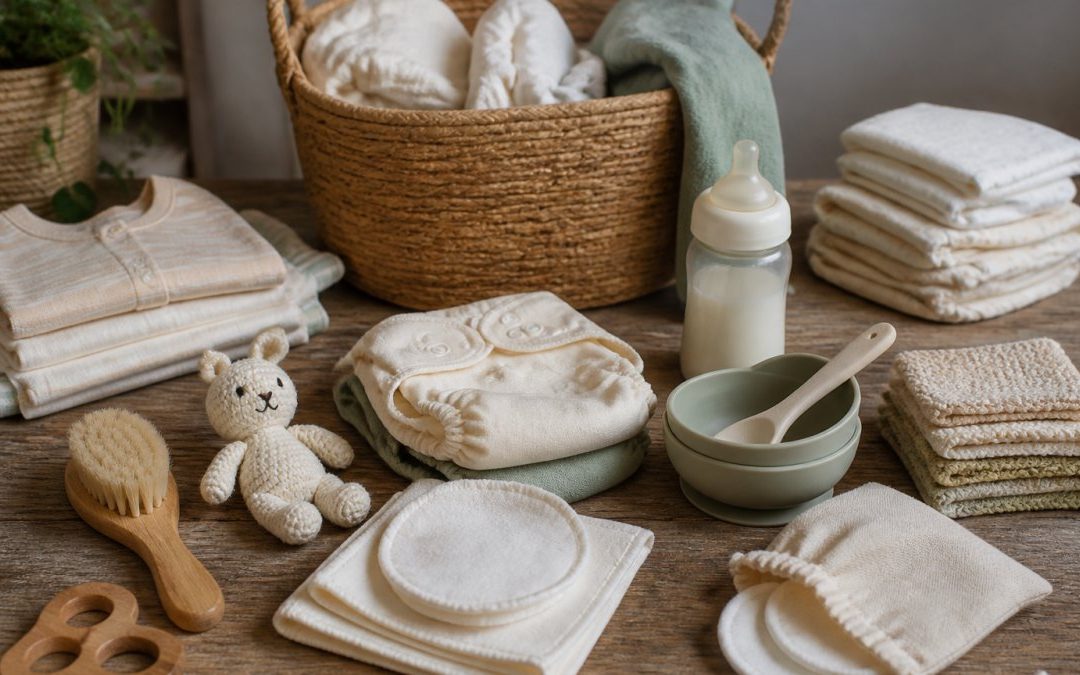
Start with the items a newborn uses every day, then layer in the rest. A practical starter kit covers four jobs: clothing, diapering, sleep, and feeding. Everything else is optional.
- 6-8 bodysuits or onesies in newborn and 0-3 month sizes
- 4-6 footed sleepers for night feeds
- 2-3 swaddles in breathable muslin
That list is deliberately short. For a month-by-month breakdown of what’s genuinely needed in the first three months, see our guide to baby essentials for the first 3 months.
Organic Newborn Clothes and the Fabrics That Hold Up to Washing
Organic newborn clothes are made from fibers grown without synthetic pesticides and processed without the harsh finishes common in conventional textiles. The label matters less than fiber and construction, a thin organic cotton bodysuit can still fall apart after twenty washes if the seams are cheap.
What holds up in practice:
- Interlock cotton for bodysuits, soft and stretchy with strong seams
- Muslin for swaddles and blankets, breathable and quick-drying
- Bamboo viscose blends for sleepwear, though they pill faster than cotton
A common mistake is buying only newborn sizing. Babies outgrow it within weeks. For more on picking fabrics that survive repeated washing, read our guide to choosing baby and toddler clothing that lasts.
How Much Clothing a Newborn Really Needs
Six to eight bodysuits and four to six sleepers cover a normal week of spit-up and diaper leaks. Newborns go through multiple outfit changes daily, but a laundry load every two days keeps a small stash in rotation.
Diapers, Reusable Baby Wipes, and the Disposable Trade-Off
Reusable cloth diapers cost more upfront and less over time, while disposables cost less to start and more per change. Here is the version with numbers, mechanics, and failure points.
How Many Diapers You Actually Need
A newborn goes through roughly 8 to 12 diaper changes a day, which works out to 240 to 360 changes in the first month. That single number drives everything else.
- Cloth: plan on 24 to 30 diapers for a newborn so you can wash every other day without running out. A stash under 20 forces daily laundry; a stash over 36 is money sitting in a drawer.
- Disposable: a first-month stash runs about 250 to 350 diapers depending on size and how often you change overnight. Buy one or two packs at a time, not a case, because newborns outgrow the smallest size fast.
The Real Cost Structure
Cloth diapers carry a one-time cost per diaper plus ongoing detergent, water, and electricity. Disposables carry no upfront cost and a per-change cost that never stops.
What shifts the math:
- Laundry access. Without an in-unit washer and dryer, cloth becomes a logistics problem, not just a cost question. Shared laundry rooms and diaper services change the equation.
- Water and energy rates. Washing every other day adds up.
- Resale and reuse. Cloth diapers hold resale value and survive a second child, which disposables never do. That is the strongest argument for cloth on a total-cost basis.
The Wash Routine That Makes Cloth Work
A workable pattern most cloth-using families settle into:
- Pre-rinse or spray solids off before the main wash (newborn breastfed diapers can usually skip this step).
- Main wash with a detergent that rinses clean, on a heavy-duty cycle with enough agitation.
- Second rinse to clear detergent residue, which is the usual culprit behind rashes and smells.
- Line dry covers and wet bags; machine dry inserts on low, or line dry everything if you have the space.
Skip the fabric softener and the dryer sheets, they coat the fibers and kill absorbency.
Reusable Baby Wipes: The Same Logic, Smaller Scale
Reusable baby wipes follow the same pattern. Cloth wipes paired with a spray bottle of water cut ongoing spend and waste, and they are gentler on sensitive skin because you control what goes on them. Plan on 2 to 3 dozen wipes so you are not washing daily, and keep a wet bag for the diaper bag.
The Middle Path Most Families Land On
A workable compromise: use disposables for the first few weeks while you recover, then transition to cloth once feeding and sleep settle into a rhythm. Many families keep a small disposable stash for travel, overnight, and the diaper bag, the arrangement that survives contact with a newborn.
Before you buy a full cloth stash, test one diaper on your baby for a week. Fit, absorbency, and wash results vary by baby, and a trial run costs far less than a 30-diaper stash you never use.
If you want to see actual reusable cloth diapers before committing, browse our reusable baby cloth diapers collection.
Non-Toxic Baby Products: How to Read Certifications and Labels
Non-toxic baby products are made without known harmful chemicals in the fabric, finish, or construction. The tricky part: “non-toxic” is not a regulated term on a baby blanket. Anyone can print it.
What to look for instead:
- GOTS for organic textiles, which covers fiber, processing, and social criteria
- OEKO-TEX Standard 100 for finished textiles tested for harmful substances
- GREENGUARD Gold for low chemical emissions in nursery furniture and mattresses
The Consumer Product Safety Commission maintains recall lists and safety standards for infant products, and it is worth a quick search before any large purchase. For textile claims, the Global Organic Textile Standard publishes what each certification level actually requires.
Watch out: a certification logo on the packaging does not guarantee the item you received is covered. Check the tag on the product itself.
Sustainable Baby Products for Sleep, Feeding, and Bath Time

Sleep, feeding, and bath items are where material choices matter most, because these products touch a baby’s skin for hours at a time. Prioritize breathable natural fibers and avoid heavy synthetic finishes.
Swaddles, Blankets, and Safe Sleep Basics
Muslin swaddles win on breathability and wash well. Keep the crib bare: a fitted sheet and nothing else. The American Academy of Pediatrics safe sleep guidance is clear that loose blankets, pillows, and bumpers do not belong in an infant sleep space. For a deeper look at bedding and sleepwear, see our guide to bedding and sleepwear for healthy sleep.
Bottles, Feeding Kits, and Bath Essentials
Glass bottles last longer and do not hold odors, though they are heavier and breakable, silicone sleeves solve most of that. Organic cotton hooded towels and washcloths are softer on newborn skin than synthetic blends and hold up to frequent washing. Our essential feeding and care guide covers the full setup.
Budget Tiers and Total Cost of Ownership for an Eco Friendly Newborn Starter Kit
Total cost of ownership is where reusable items quietly win. Cloth diapers and reusable wipes cost more on day one and less every month after, while disposables invert that curve. Clothing is the opposite: fewer, better pieces beat a large cheap stash that pills after a month. Here is where the money actually goes.
What Drives the Cost of a Starter Kit
Four categories carry almost the entire budget: clothing, diapering, sleep, and feeding. Bath and care items are a small tail. Within each category, the cost driver is quantity and material, not the label.
- Clothing: 6 to 8 bodysuits and 4 to 6 sleepers is the working stash. Organic cotton costs more per piece, but piece count matters more than the fiber premium. Buying 30 outfits is the most common, and most expensive, overbuy we see.
- Diapering: the largest single line item either way. Cloth is a one-time stash purchase plus ongoing laundry costs; disposables are a recurring purchase with no upfront cost.
- Sleep: one fitted sheet, one waterproof mattress cover, and 2 to 3 muslin swaddles. This category is cheap to do well and easy to overbuy.
Three Realistic Tiers
| Tier | Approach | What It Covers | Trade-Off |
|---|---|---|---|
| Lean | Secondhand clothing, minimal new items, cloth from week one | Clothing, diapers, sleep, basic feeding | More washing, less convenience, more time |
| Balanced | New organic clothing, cloth diapers after week four, mixed feeding kit | Full starter kit with some disposables | Moderate upfront spend, moderate laundry load |
| Full | All-new certified organic across every category | Complete kit plus backup stash | Highest upfront cost, longest lifespan, best resale |
Where the Recurring Costs Hide
The upfront kit is only half the story. Recurring costs are diapers, wipes, detergent, and replacement clothing as your baby outgrows sizes. Two patterns are worth planning for:
- Diapers and wipes are the recurring line that never stops. Cloth converts most of that cost into a one-time purchase plus laundry; disposables keep it recurring for years, the biggest lever on total cost of ownership.
- Clothing is a rolling cost, not a fixed one. Newborn sizing lasts weeks, not months. Budget for 0-3 month and 3-6 month sizes in the same planning cycle so you are not rebuying at full price in a panic.
How to Compare Prices Without Getting Burned
We do not publish prices because they shift with stock, sizing, and sales. Instead, compare on a per-use basis:
- Divide the price by the number of uses. A cloth diaper used 300 times costs a fraction per change of a disposable used once.
- Add the laundry cost to cloth. Detergent, water, and energy are real costs, and they belong in the comparison.
- Count resale value. Cloth diapers and quality clothing hold resale value; disposables hold none.
- Check the product page for current pricing before you build a registry, and buy the smallest viable quantity first.
The tier that saves the most money over time is not always the cheapest to start. Lean and Balanced tiers usually win on total cost of ownership; Full wins on convenience and resale. Pick the trade-off you can actually live with for a year, not the one that looks best on day one.
Start with the checklist above, then build outward from the categories you actually need.
Shopping the All For Baby And Kids Starter Collection
All For Baby And Kids stocks clothing, toys, and nursery essentials in one place, one cart instead of three. Our selection leans on eco-friendly materials and thoughtful packaging, and our guidance helps you skip items you will never use. Customers routinely tell us the clothing is both adorable and durable.
Start with the checklist above, then build outward from the categories you actually need.
Frequently Asked Questions
How do you build an eco friendly newborn starter kit without overbuying?
Start with the four daily routines: sleep, feeding, diapering, and bathing. Buy the minimum for each, then add as your baby’s patterns become clear. A practical baseline is 6-8 onesies, 4-6 swaddles, 24 cloth diapers or one month of disposables, 2-3 bottles, and 2 hooded towels. Skip newborn shoes, excessive toys, and bulk clothing in sizes your baby will outgrow in weeks. A prioritized checklist keeps spending focused on items used daily rather than once.
Are organic newborn clothes better for babies with sensitive skin?
Organic cotton is grown without synthetic pesticides and is often processed without the finishing chemicals used on conventional fabric, which matters for a newborn’s thin, absorbent skin. It is not a guaranteed fix for eczema or dermatitis, but many parents find it reduces irritation. Look for certified organic cotton, check that dyes are low-impact, and wash new clothes before the first wear. Fit and breathability matter as much as the fiber itself.
Are reusable baby wipes worth it compared with disposables?
Reusable cloth wipes cut ongoing waste and usually cost less over a year of diapering, especially when washed with diaper loads. They work best with a spray bottle of water or a gentle solution and a wet bag for outings. Disposables win on convenience during the newborn phase when laundry piles up. Many parents keep both: cloth at home, a small disposable stash in the diaper bag. Plant-based disposable wipes are a middle option.
Which newborn essentials are worth buying sustainably?
Spend on items that touch skin daily and last through multiple children: swaddles, onesies, crib sheets, bath towels, and diapers. These see constant washing, so durable organic cotton and muslin pay off. Skip premium pricing on short-use items like newborn-size clothing and novelty toys. Check for certifications such as GOTS for textiles and OEKO-TEX Standard 100 for harmful substance testing, and ask whether packaging is recyclable or plastic-free before you buy.
Building a starter kit that is genuinely eco-friendly takes more thought than clicking “add all.” The reward is a nursery full of items that get used, washed, and passed down instead of donated. All For Baby And Kids curates high-quality clothing, toys, and essentials with eco-friendly materials and sustainable packaging, backed by quick and secure shipping. Browse the collection and build a registry you will not regret.
