
Last Updated: November 1, 2026
Quick Summary
Choose sensory toys for a cautious toddler by first watching how your child reacts to touch, sound, light and movement. Then offer one gentle, low-intensity item at a time, keep sessions short and stop before your child becomes upset.
- Offer one new sensory item per week, starting with about five minutes.
- Watch everyday routines for several days to spot patterns in your child’s reactions.
- Use a texture ladder: look, near, tool touch, one finger, whole hand, then both hands.
- Choose single-sensation, child-controlled toys that are low-intensity and easy to leave.
- Check age labels, non-toxic materials and small parts before buying any sensory toy.
Table of Contents
- Why Cautious Toddlers Need a Different Approach to Sensory Toys
- Read Your Toddler’s Sensory Preferences Before You Shop
- How to Introduce Sensory Play to Toddlers Gradually
- Sensory Toys for Toddlers Who Dislike Textures
- Safe Sensory Toys for Toddlers: What to Check Before Buying
- Recognizing Sensory Overload and Matching Toys to Your Child’s Pace
- Booking Your Next Step: Building a Sensory Toy Starter Set at All For Baby And Kids
- Frequently Asked Questions
Why Cautious Toddlers Need a Different Approach to Sensory Toys
Not every toddler is excited by a bin of bright, squishy, noisy toys. Some hang back, cover their ears at the first beep, or pull away from a textured ball.
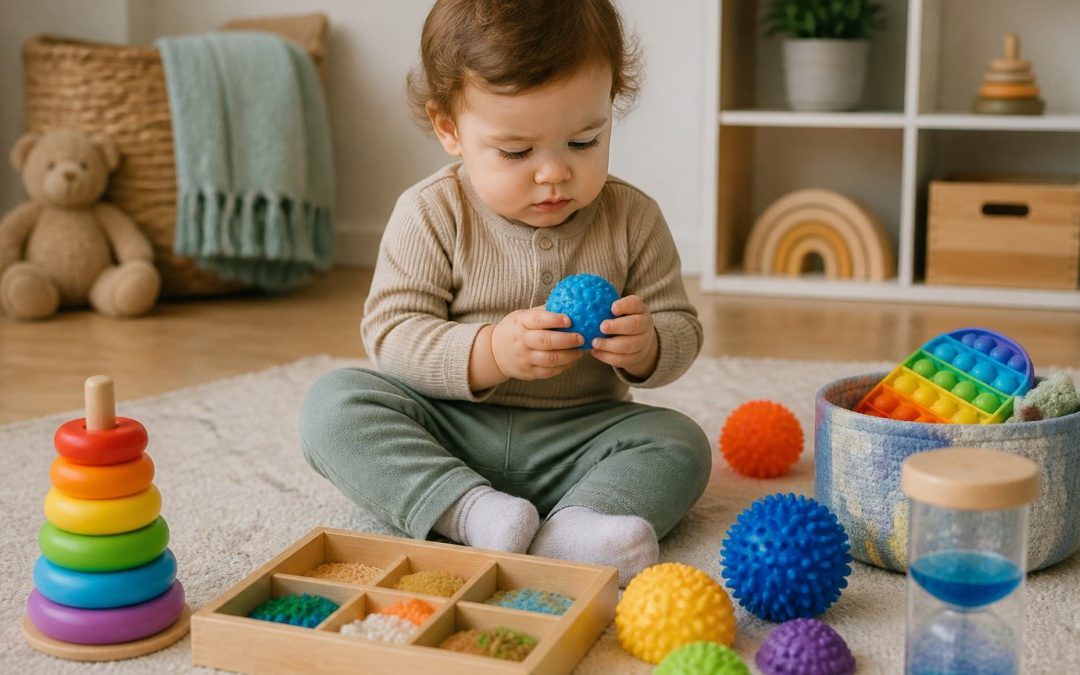
Sensory toys invite a child to explore touch, sight, sound, movement, or body position. Browse gentle sensory play products designed for toddlers who avoid textures to find options that suit a cautious child.
A cautious child often needs fewer toys, introduced one at a time, with a grown-up nearby:
- Offer one new sensory item per week
- Keep the first sessions short, around five minutes
- Sit at your child’s eye level and let them lead
Read Your Toddler’s Sensory Preferences Before You Shop
Before you buy anything, watch how your child responds to everyday sensations. Notice what they reach for, what they avoid, and how they react to sound, light, and touch during normal routines.
Look for patterns over several days; repeated reactions tell you more than a single bad moment.
Check these areas:
- Touch: Do they accept sticky hands, sand, or wet grass, or do they resist?
- Sound: Do they startle at vacuums, blenders, or crowded rooms?
- Light: Do they squint at bright lights or seek out sunny spots?
Write down what you see. A simple list helps you spot which senses your child enjoys and which need a gentler introduction.
Sensory Sensitivity Versus Sensory-Seeking Behavior
Cautious and seeking children can look similar from the outside, but they need different toys. A sensitive child pulls back from input.
A sensitive toddler might avoid finger paint, refuse socks with seams, or cry at loud music.
Some children do both, depending on the sense or the day.
If you have ongoing concerns about how your child handles sensation, talk with your pediatrician.
How to Introduce Sensory Play to Toddlers Gradually
A slow start works best. Choose one sensory item, place it on the floor during a calm moment, and let your toddler notice it on their own terms. You can browse sensory baby toys suited to gradual introduction to find a good first choice.
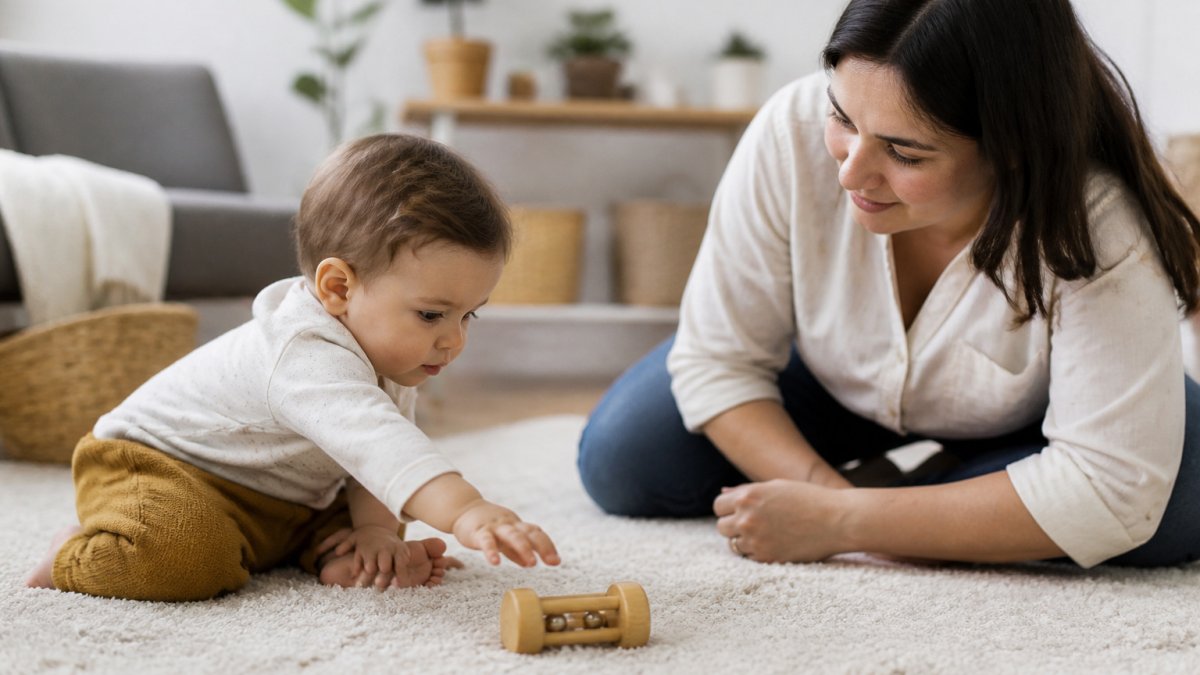
Here is a simple sequence many parents follow:
- Model the play. Use the toy yourself, squeeze the soft ball, shake the rattle, narrate quietly.
- Leave it nearby. Don’t hand it over; let your child approach when ready.
- Offer a second option. Place a familiar toy beside the new one so there is always a safe choice.
- Keep sessions short. Stop while your child is still interested.
- Repeat across days. Familiarity builds comfort over time.
A cautious toddler may need many short exposures before touching a new item. Progress can look like looking, then pointing, then touching with one finger. Celebrate each small step.
Sensory Toys for Toddlers Who Dislike Textures
Texture aversion is one of the most common reasons a toddler hangs back from sensory play.
Start by sorting textures into three rough buckets, based on what you have observed: see toddler-specific sensory toys that match a cautious child’s pace.
- Already comfortable: smooth wood, soft cotton, plush fabric, silicone with a matte finish, warm water.
- Borderline: bumpy rubber, corduroy, felt, dry rice, crinkly fabric, slightly sticky silicone.
- Currently avoided: wet sand, finger paint, slime, shaving cream, cold metal, rough burlap.
Begin every new texture session in the “already comfortable” bucket to build a felt sense of safety before you ask for anything new.
A Gradual Texture Ladder
Rather than offering a new material and hoping for the best, work through a ladder of contact. Each rung is a smaller ask, so a hesitant child can stop at any step without the session falling apart.
- Look. Place the material in a clear container at eye level. Let your child watch you touch it.
- Near. Move the container within arm’s reach. Do not hand it over.
- Tool touch. Offer a spoon, a paintbrush, or a cloth so your child can interact without skin contact.
- One finger. Invite a single-finger poke. Stop there for the day if that is all they offer.
- Whole hand. Only after several successful finger touches.
- Both hands and wrists. This is often the point where messy play becomes tolerable.
A cautious toddler may spend a week on rung one. That’s fine. Progress looks like looking longer, leaning in, or reaching for the tool, not necessarily touching the material directly.
Texture-Specific Starting Points
Some materials are easier entries than others. These tend to work well for texture-sensitive toddlers:
- Smooth wooden rattles and teethers with a sanded, sealed finish, no seams, no bumps.
- Plush toys with a single fabric type rather than a patchwork of textures.
- Fabric books where each page has one gentle texture, not five.
Avoid combination toys that mix wet, sticky, and noisy at once. A toy that is squishy, scented, and beeping is three sensations competing for attention. Pick one texture per session and keep the rest of the environment quiet.
What to Do When a Texture Is Refused
Refusal is information, not failure. When your child pulls back:
- Narrate without pressure. “That feels bumpy. You’re looking at it.” Labeling the sensation helps your child build language for it.
- Offer distance tools. A spoon, a cloth, or a plastic bag over the hand lets them explore without direct contact.
- Pair with a preferred texture. Put a small amount of the new material next to something familiar, a smooth wooden block beside a bumpy ball.
A common pattern is that texture aversion shrinks fastest when the adult models the play without narrating expectations. Squeeze the dough, run your fingers through the rice, and stay quiet. Many cautious toddlers join in once the pressure to perform is gone.
Never hold a child’s hand into a texture or wipe a mess onto them as a joke. Forced contact tends to strengthen the aversion and can make the next session harder.
If a child avoids an entire category of texture, for example, all wet or all sticky materials, across many months and it interferes with meals, dressing, or play, bring it up with your pediatrician.
Safe Sensory Toys for Toddlers: What to Check Before Buying
Safety matters most when a child is still learning to explore. Before you buy any sensory toy, inspect it carefully and check the labels.
Look for these features:
- Age labeling: The toy should match your child’s developmental stage.
- Non-toxic materials: Look for clear information about the paint, finish, and plastic used.
- No small parts: Small pieces that fit through a toilet paper tube are a choking hazard for children under three (Small Parts Ban and Choking Hazard Labeling).
Checking recall notices before you buy is a quick habit that offers real protection.
Sensory Toy Safety for Toddlers Who Still Mouth Toys
Many toddlers put everything in their mouths. This is normal, but it changes what counts as a safe toy.
Look for toys labeled as suitable for mouthing, and inspect them regularly for cracks, loose parts, or worn paint. Discard any item that shows damage. Keep small, detachable pieces out of reach.
Before buying, check these safety features and what each one protects against.
| Check | What to look for | Why it matters |
|---|---|---|
| Age labeling | Matches your child’s developmental stage | Suits the child’s stage |
| Non-toxic materials | Clear info on paint, finish and plastic | Protects a child who mouths toys |
| No small parts | Nothing that fits a toilet paper tube | Choking hazard under three |
| Secure construction | Seams, eyes and attachments hold firm | Prevents loose pieces |
| Washable surfaces | Easy to clean after mouthing | Keeps toys hygienic |
Recognizing Sensory Overload and Matching Toys to Your Child’s Pace
Sensory overload is what happens when the amount, intensity, or speed of input outruns what a toddler can process. For a cautious child, the threshold is often lower and the warning signs come earlier, which is exactly why reading them well matters more than buying the “right” toy.
Early, Mid, and Late Cues
Overload rarely appears out of nowhere. It usually moves through stages, and the earlier you catch it, the easier it is to redirect.
Early cues (adjust now):
- Turning the head away from the toy or the room
- Freezing mid-reach or going still
- A brief frown, lip press, or blink spike
Mid cues (reduce input):
- Covering ears or eyes
- Arching the back or pushing the toy away
- Whining, grunting, or short cries
Late cues (end the session):
- Full crying or screaming
- Hitting, biting, or throwing
- Rigid body, clenched fists
A useful habit is to note which cue your child shows first. Most toddlers have a signature early sign, a head turn, a freeze, a particular frown. Once you know it, you can adjust before the session escalates.
A Simple Response Sequence
When you see an early or mid cue, work through this sequence in order. Stop as soon as your child settles.
- Pause the input. Stop shaking, squeezing, or demonstrating the toy.
- Lower the volume. Turn off music, dim a bright light, or move away from a noisy appliance.
- Reduce the space. Move to a smaller, quieter room or a corner with fewer toys visible.
- Offer a familiar anchor. Hand your child a known comfort toy or blanket.
- Wait. Give 30 to 60 seconds of quiet before deciding whether to continue.
- Resume smaller. If your child re-engages, offer a milder version of the activity, one texture instead of three, a softer sound, slower movement.
The goal is not to avoid all sensory input. It is to keep input inside the window where your child can stay curious. A session that ends with your child still interested is a better session than one that ends in tears, even if it was shorter.
Matching Toys to Tolerance, Not Just Age
Age labels tell you what is safe to put in front of a toddler. They do not tell you what that particular toddler can handle on a given day. Use a simple preference-and-tolerance check before introducing anything new:
- Which sense is the toy mainly targeting? Touch, sound, sight, movement, or a mix.
- How intense is the input? Soft vs. loud, dim vs. bright, slow vs. fast, smooth vs. bumpy.
- How many sensations at once? One is easier than three.
A cautious toddler usually does best with toys that are low-intensity, single-sensation, child-controlled, and easy to leave. Save multi-sensation, unpredictable, or adult-operated toys for later.
Adjusting Timing and Intensity Week to Week
Pace is not fixed. A child who tolerated a noisy toy on a well-rested morning may melt down over the same toy after a short nap or a busy day. Build in these adjustments:
- Time of day: Many cautious toddlers do best with new sensory input in the morning, after a meal, and before the day gets busy.
- Session length: Start at three to five minutes and extend only when your child stays engaged.
- One new thing at a time: Change either the toy or the setting, not both.
If your child shows persistent distress around everyday sensations, not just toys, or if overload cues appear during routine activities like dressing, eating, or bath time, talk with your pediatrician.
Booking Your Next Step: Building a Sensory Toy Starter Set at All For Baby And Kids
Start small. A starter set of three to five sensory items gives your toddler enough variety without overwhelming them. Include one item for touch, one for sound, one for sight, and one for movement.
For a broader primer on safety criteria before you buy, read The Ultimate Guide to Choosing Safe Infant Toys & Games. Mouthing toddlers will also find our Non Toxic Wooden Toys for Toddlers: Safe Picks Guide useful.
Take your time, follow your child’s lead, and adjust as they grow. Every small step counts.
Frequently Asked Questions
How do I introduce sensory toys to a cautious toddler?
Start with one toy and let your toddler explore it on their own terms. Sit at their level, model the play without pressuring them, and keep sessions short, around five to ten minutes. Offer the same toy across several days before adding a second. If your child pulls away, pause and try again later with a softer or less intense option. Progress is measured by how willingly your toddler approaches the toy, not by how long they play with it.
What sensory toys are best for toddlers who dislike textures?
Toddlers who dislike textures often do better with toys that offer visual or auditory input rather than tactile surfaces. High-contrast cards, soft-sound rattles, and lightweight mirrors can engage attention without touching anything unfamiliar. Smooth wooden shape sorters are another option because they offer a clear form to manipulate with minimal texture. Let your child choose the pace, and introduce a single new texture only after they show comfort with the surrounding toy.
Are sensory toys safe for toddlers who still mouth toys?
Yes, when you choose toys made from non-toxic, BPA-free materials with finishes that are sealed and free of small detachable parts. Check that the toy is sized to avoid choking hazards, and look for smooth edges and securely attached components. Wash toys regularly and inspect them for cracks or loose parts. Always supervise toddlers during play, especially with any toy that makes sounds or has moving pieces.
What should I look for when buying sensory toys for toddlers?
Focus on your child’s age, developmental stage, and current sensory preferences. Look for clear age labels, materials that are non-toxic and easy to clean, and designs without small parts. Choose toys that let your child control the input, such as a rattle they can shake gently or a soft ball they can squeeze. Read product descriptions carefully and prioritize well-made items over large sets, since fewer carefully chosen toys are easier for a cautious child to explore.
