Last Updated: October 25, 2026
Quick Summary
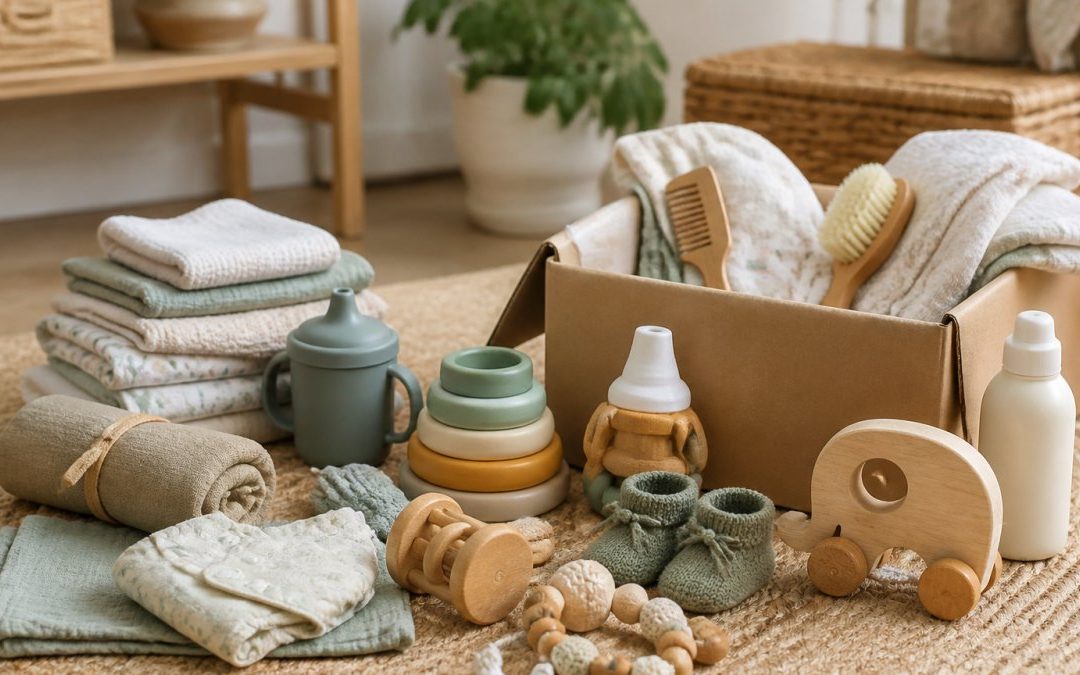
The sustainable baby gift ideas that actually get used in 2026 are practical, washable items sized right for daily life, such as silicone bibs with catch pockets, hooded towels, organic cotton onesies, and wooden or silicone toys matched to the baby’s stage. Verify claims with third-party certifications like GOTS, OEKO-TEX Standard 100, FSC, or GREENGUARD Gold, and size up when in doubt.
- Sustainable is not a regulated word on baby product labels, so check third-party certifications instead of brand badges.
- Under $25, gift a silicone teether, cloth book, or two-pack of organic cotton burp cloths.
- Silicone bibs with a catch pocket wipe clean, resist stains, and handle the puree stage.
- Match toys to age: cloth books for 0-3 months, wooden rattles and teethers for 3-6 months.
- Avoid gifting sleep positioners, padded crib bumpers, or loose blankets for infant sleep spaces.
Table of Contents
- Why Sustainable Baby Gifts Get Used (and Which Ones Don’t)
- How to Verify Sustainability Claims Before You Buy
- Eco-Friendly Baby Shower Gifts That Fit Any Budget
- Organic Baby Gifts: Onesies, Bibs, and Towels That Hold Up
- Natural-Material Baby Toys: Wood, Wool, and Silicone Picks
- Sustainable Baby Registry Essentials New Parents Skip Buying Themselves
- Sizing, Age Suitability, and Safety: What to Check Before Gifting
- Low-Waste Wrapping and Experiences Instead of More Stuff
- Frequently Asked Questions
Why Sustainable Baby Gifts Get Used (and Which Ones Don’t)
Most baby gifts get used once and then sit in a closet. A sustainable baby gift ideas approach in 2026 starts with one question: will this item survive daily life with a newborn? The gifts that earn their place are practical, washable, and sized right.
The gifts that don’t? Novelty items, clothes in the wrong size, and anything that needs special care.
Think about the first three months. Parents are changing diapers around the clock, doing endless laundry, and running on broken sleep. A gift that adds work gets quietly retired.
A gift that removes work gets used until it falls apart.
That’s the filter we use for every idea below. Useful beats adorable. Durable beats trendy. And a gift that grows with the baby beats one that fits for six weeks.
How to Verify Sustainability Claims Before You Buy
“Sustainable” is not a regulated word on a baby product label. That means anyone can print it. The good news: real certifications are specific and checkable, and you can confirm most of them in a few minutes.
Certifications Worth Checking
Look for third-party certifications, not brand-made badges. These carry weight:
- GOTS (Global Organic Textile Standard): covers organic fiber content and processing, from field to finished garment.
- OEKO-TEX Standard 100: tests finished textiles for harmful substances.
- FSC (Forest Stewardship Council): confirms wood comes from responsibly managed forests.
- GREENGUARD Gold: checks products for low chemical emissions, useful for nursery furniture and mattresses (UL GREENGUARD Certification).
You can verify GOTS and OEKO-TEX claims through their public certification databases. The Federal Trade Commission’s Green Guides explain how environmental marketing claims should be substantiated, which is a useful lens for spotting vague language.
Red Flags That Signal Greenwashing
Watch for these warning signs:
- The word “natural” with no certification or explanation
- A brand logo styled to look like a certification seal
- Claims like “chemical-free” (everything is made of chemicals)
- No ingredient or material list anywhere on the page
- Sustainability talk on the homepage, silence on the product page
Eco-Friendly Baby Shower Gifts That Fit Any Budget
Budget matters, and it’s the first thing most gift guides ignore. You don’t need to spend a lot to give something a new parent will actually use. The trick is to think in cost-per-use, not sticker price.
Here’s how we’d sort eco-friendly baby shower gifts by spend, with the trade-offs spelled out.
| Budget | Gift Idea | Why It Works | Watch For |
|---|---|---|---|
| Under $25 | Silicone teether, cloth book, or a two-pack of organic cotton burp cloths | Small, safe, gets daily use | Check for food-grade silicone and BPA/phthalate-free labeling; board books should have rounded corners |
| $25-$50 | Organic cotton onesie set, hooded towel, or a wet bag | Washes well, sized for real use | Confirm GOTS or OEKO-TEX certification on the tag, not just the listing |
| $50-$100 | Bamboo swaddle pair, wooden rattle set, or a cloth diaper trial pack | Lasts past the newborn stage | Bamboo blends vary; look for fiber content and care instructions |
| $100+ | Organic bedding bundle, convertible sleep sack, or a gift set | Big-ticket item parents skip | Verify mattress and bedding certifications like GREENGUARD Gold where relevant |
A practical tip: pair a small item with a handwritten note about why you chose it. Parents remember the thought, not the price tag.
Group gifting works well for the bigger items. A few friends chipping in for one quality piece beats five small things nobody asked for.
One more budget lever: timing. Baby shower gifts bought in advance can miss the season. A winter baby born in July needs warm sleepwear by fall, not a summer onesie. If you’re buying months ahead, favor items that work year-round (towels, bibs, books) over seasonal clothing.
If you’re unsure between two price tiers, choose the lower one and add a consumable (diaper cream, laundry detergent sheets) that parents will use up. It stretches the budget without adding clutter.
Organic Baby Gifts: Onesies, Bibs, and Towels That Hold Up
Durability is where organic baby gifts either prove themselves or fall apart. Organic cotton feels softer, but softness alone doesn’t survive a hundred washes. Look for dense fabric, reinforced seams, and honest care instructions.
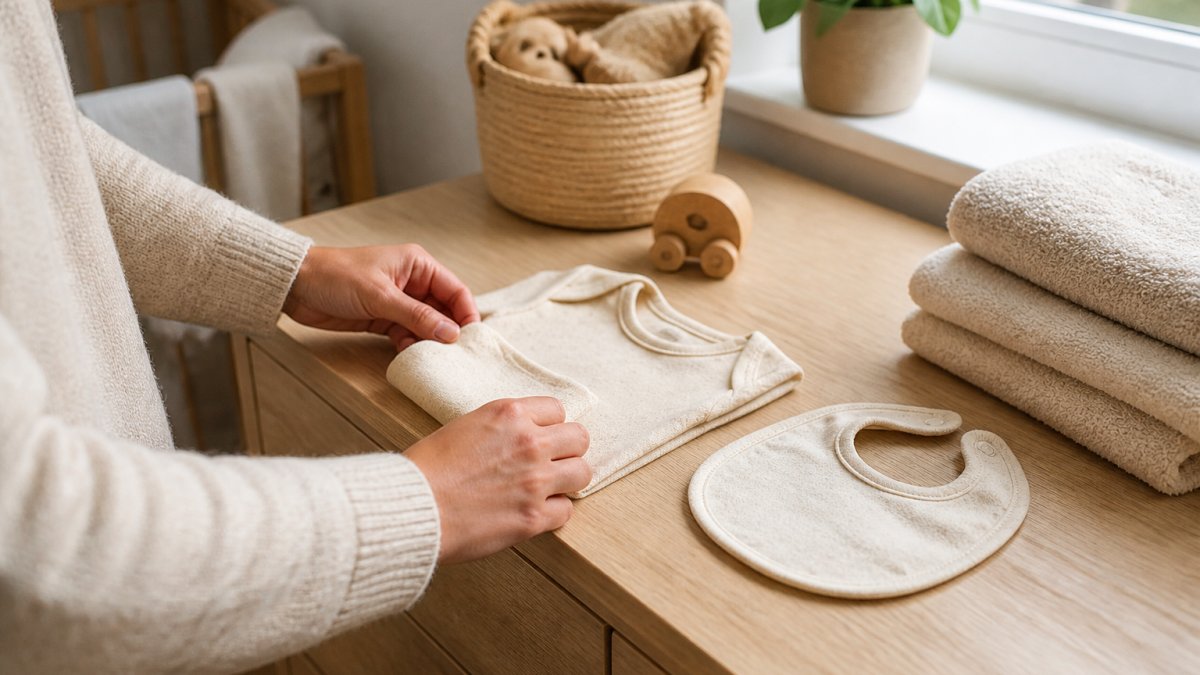
Onesies: check the fabric weight and the snap quality. Thin cotton stretches out at the neck within weeks. Extenders can stretch the usable life of a favorite onesie by months.
Bibs: silicone bibs with a catch pocket are the workhorse gift. They wipe clean, don’t stain, and handle the puree stage without drama.
Towels: a hooded towel gets used every single bath night. You can shop our hooded baby bath towel to gift one that will actually get used.
If you want to compare specific organic clothing brands before choosing a onesie or towel, our guide to the best eco friendly baby clothing brands breaks down what holds up. For a practical bib option, you can shop our waterproof silicone baby bib.
Natural-Material Baby Toys: Wood, Wool, and Silicone Picks
Natural-material baby toys work best when they match the baby’s stage and the material’s real trade-offs. A newborn needs contrast and grip. A six-month-old needs something to chew.
Here’s how we’d match toys to age, with the material trade-offs spelled out:
- 0-3 months: high-contrast cloth books, soft wool felt shapes. Wool is warm and breathable but can felt and shrink with hot washing; check care labels and hand-wash when possible.
- 3-6 months: wooden rattles, silicone teethers, graspable rings. Wood is durable and repairable but needs a non-toxic, water-based finish; silicone is easy to clean but can attract lint and should be food-grade.
- 6-12 months: stacking wooden toys, textured balls, board books. Board books survive chewing and hand-downs; wooden stackers can be sanded and re-oiled if they splinter.
Safety checks matter here. For a deeper guide to safe non-toxic wooden toy picks to gift, see our non toxic wooden toys for toddlers guide.
Durability is where natural materials earn their keep. Wooden toys can be wiped, sanded, and re-finished; many brands sell replacement parts. Silicone resists staining but can degrade with repeated dishwasher cycles, so follow the manufacturer’s cleaning instructions.
End-of-life matters too. Wooden toys are often repairable and can be passed on or donated; silicone is recyclable in some municipal programs but rarely curbside; wool can be composted in some systems if untreated.
Books deserve a mention too. Board books are developmental toys in disguise. They build language, survive chewing, and get handed down.
Avoid vintage or hand-me-down wooden toys with unknown finishes or loose parts unless you can confirm they meet current safety standards. Older paints may contain lead.
Sustainable Baby Registry Essentials New Parents Skip Buying Themselves
New parents buy the cute stuff and skip the boring essentials. That gap is where the best sustainable baby gifts live. Sustainable baby registry essentials tend to be the unglamorous items that get used every day.
The most-skipped items often include:
- Extra crib sheets (you’ll need more than you think)
- A second wet bag for outings
- Reusable cloth wipes to pair with diapers
- A larger stash of burp cloths
- Size-up clothing for months three to six
Gifting one of these is quietly brilliant. It says you thought about the actual week, not the baby shower photos.
Sizing, Age Suitability, and Safety: What to Check Before Gifting
Sizing is the number one reason baby clothes get returned or never worn. Babies grow fast, and a newborn-size onesie may fit for only a few weeks. When in doubt, size up.
Three quick checks before you buy:
- Check the size chart, not the age label. Brands vary widely.
- Buy for the season ahead. A winter newborn gift in summer cotton won’t work.
- Confirm the return policy. Fit issues happen; a flexible return makes the gift safer.
On safety, the Consumer Product Safety Commission tracks recalls and sets standards for infant products. Before gifting any toy, check for small parts, loose batteries, and long cords or strings, which are strangulation risks for infants.
For sleep items, keep it simple. Firm mattress, fitted sheet, nothing loose in the crib.
Watch out: avoid gifting any sleep positioner, padded crib bumper, or loose blanket for an infant’s sleep space. These run against safe sleep guidance, and a well-meaning gift can create a real hazard.
Low-Waste Wrapping and Experiences Instead of More Stuff
The most sustainable gift is sometimes not a product at all. Low-waste wrapping and experience gifts solve two problems at once: less packaging in the trash, and less clutter in a small nursery.
For wrapping, skip the glossy paper and plastic bows. Try:
- Reusable cloth wraps or fabric gift bags
- Recycled kraft paper with paper tape
- A reusable basket that doubles as nursery storage
- Hand-delivered gifts with no wrapping at all
Experiences work especially well for second-time parents who already own the basics. Consider a meal delivery, a house-cleaning session, a diaper service trial, or an evening of babysitting. These gifts get used and remembered.
If you do buy physical gifts, ask the seller about packaging. Reputable eco-focused shops will tell you exactly how items ship. At All For Baby And Kids, we focus on eco-friendly materials and thoughtful packaging, so a sustainable gift stays sustainable from checkout to doorstep.
Frequently Asked Questions
What are the best sustainable baby gifts for a new baby?
The gifts parents reach for most are the ones they use daily: organic cotton onesies and bibs, bamboo swaddles, a wooden rattle or silicone teether, and a soft baby towel. These cover feeding, sleep, soothing, and bath time without adding clutter. Choose items in sizes 3-6 months or larger, since newborns outgrow the smallest sizes fast, and pick neutral colors so the gift works for any baby. A small set of two or three useful pieces beats one decorative item.
What materials should I look for in sustainable baby gifts?
Look for organic cotton, bamboo fabric, wool, and sustainably sourced wood, all finished with non-toxic dyes. These natural fibers breathe, wash well, and soften over time, which matters for items that get washed constantly. Check the label for a third-party certification rather than trusting front-of-pack wording, and confirm that wooden toys use water-based finishes instead of solvent-based paints. Materials listed plainly on the product page are a better sign than vague phrases like all natural.
How can I choose a sustainable baby gift that parents will actually use?
Match the gift to a stage the baby will reach within a few months, not one they have already passed. Ask what the parents still need, or check their registry for gaps. Consumables and essentials such as organic bibs, towels, and larger-size clothing get used; decorative items often sit on a shelf. If you are unsure, a gift card or a small set of everyday basics is safer than a large one-off piece the family may already own.
How can I wrap a baby gift sustainably?
Skip glossy wrap and use a reusable cloth, a fabric tote, or a small basket the parents can keep for nursery storage. Plain kraft paper with paper tape and a sprig of dried greenery works too and recycles cleanly. Avoid glitter, foil, and plastic ribbon, which cannot be recycled. If you order from a shop, ask whether it ships in plastic-free packaging, and keep the gift receipt loose inside rather than taped to the box.
Sustainable gifting comes down to one habit: buy fewer things, but buy the right ones. A washable bib, a durable towel, a wooden toy that survives two kids, and a registry essential nobody else thought of will outlast a pile of novelty gifts every time. We built All For Baby And Kids around that idea, with a curated selection of clothing, toys, and essentials, parent-friendly prices, and eco-friendly materials and packaging. Browse now and put together a gift that actually gets used.
